  |
French Connection Men's Long Sleeve V-Neck Contrast Henley Sweater, Black/Charcoal, Small Product Brand : French Connection Model : 58EH6 |

List Price : $88.00 Our Price : $69.99 You Save : 20% 

See All Similar Products » |
French Connection Men's Long Sleeve V-Neck Contrast Henley Sweater, Black/Charcoal, Small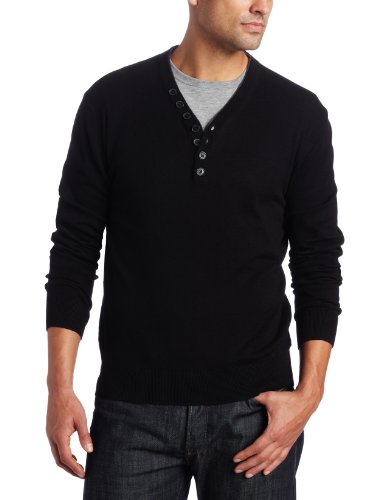 French Connection Men's Long Sleeve V-Neck Contrast Henley Sweater, Black/Charcoal, Small
 Overviews Contrast henley sweater French Connection Men's Long Sleeve V-Neck Contrast Henley Sweater, Black/Charcoal, Small Features
Available Stores


|


The studios were making the same formulaic films they'd been made for decades, and for the first time they weren't making money. In fact they were losing money, lots of it. The Studio's solution at the time was to throw even more money at the problem, making their films bigger and bigger and more expensive. The only thing this extra spending seemed to achieve was increasing the losses of these films. They needed something different, they needed population that could understand and tap into this new audience. To the chagrin of Warner Brothers Warren Beatty (Dick Tracy, Reds) decided he would be the one to step into that void.
French Connection Wizard Dress
Warren Beatty was a name in Hollywood at the time but exiguous more. He had starred in a few films but he was not taken seriously as an actor, and to his dismay often dismissed as a "pretty boy". Despite his lightweight credit Beatty wasn't content to just be other smiling face on the marquee, he wanted to do work he felt meant something. Unsatisfied with the types projects available to him Beatty set out to take operate of his own career. For an actor to yield his own films at this time was roughly unheard of in Hollywood. This wasn't some just some actor seeing for a exiguous vanity; this was a movie star using his power to generate smaller, more personal, artistic films. He discovered the script for Bonnie and Clyde off of a hint from French New Wave director Francois Truffaut (The 400 Blows, Jules and Jim), hired himself an edgy American director in Arthur Penn (Mickey One, exiguous Big Man) and cast mostly unknowns (Faye Dunaway) and stage actors (Gene Hackman) in the lead roles. It is hard to imagine how radical it must have been in 1967 for a important man to not only set up his own picture, but to cast himself as a violent, sometimes unlikable and impotent bank robber.
Breaking all the rules is what makes Bonnie and Clyde such a moving movie. At the time of its issue this was a truly shocking film. Most Americans hadn't seen this kind of movie before. Bonnie and Clyde was overtly violent, sexually dysfunctional and maintained a sense of broad comedy as an often off-putting juxtaposition. The violence of the film was thought about to be gratuitous by many. It is because of these traits that Bonnie and Clyde is often called the first "modern" film, paving way for the Hollywood we have of today.
Arthur Penn's mandate for this film was that when population got shot he wanted it to hurt. This must have struck a chord with an audience that, through Vietnam, was quickly realizing that violence wasn't quite as clean as the movies had led them to believe. Watching it today it's hard to believe the violence shown was ever shocking. There are countless hours on prime time network Tv displaying images as descriptive as anyone you will see in Bonnie and Clyde. What is shocking about the film is not the images, but the jarring shifts in tone.
We often marry comedy with violence in modern films, but it is regularly cynical one liners. This is a film that will give you a slapstick moment accompanied by upbeat music, immediately interrupted by a sudden outburst of descriptive violence. Watching the movie for the first time can be an odd experience, because you are never sure either you are supposed to be enjoying what you are watching. This is a film that actually tells a joke over and over until it isn't funny anymore.
On first watch Bonnie and Clyde seems to be a movie about bank robbers in the south while the depression. One of the great things about watching it now is that the conference can be made that it good encapsulates the era of the 60's than it ever did the 30's. At one point in the film Bonnie says, "You know what, when we started out, I understanding we was actually goin' somewhere. This is it. We're just goin', huh?" This is a movie about frustration and rebellion.
The opportunity images of the film are that of a nude Bonnie in her bedroom obviously unhappy about something. Is this because a lover just left her and she is unsatisfied or rejected? Did she just wake up and is plainly unhappy about facing other day? Or is she so disengaged with life that putting on clothes would want too much effort? The answer doesn't matter, what matters is that within moments we understand that this is a woman profoundly unhappy with her life. Bonnie's drive to a life of crime isn't about a tangible need for money but rather a spiritual need to exert operate over her own life and refusal to verbalize the status quo. Bonnie was just like the millions of young population who grew out their hair and lived unconventional lifestyles in the 60's. She might not have known where she was headed but she knew what she leaving.
This distrust of authority is most blatantly dramatized in the scene where Clyde captures a Texas Ranger. Clyde says the Ranger should be, "... Home protectin' the proprietary of poor folk, not out chasin' after us!" Not only do they have no respect for his authority, they feel he is a hypocrite and abuses the power he has. This sentiment is shared by the poor as well. To those suffering, Bonnie and Clyde come to be folk heroes to be praised for standing up and taking what they want from an unfair world. Stretching back from Jesse James to the gansta rap among poor minorities today, it seems when population are having a rough time there will be a glamorization of those snubbing their noses at authority to heighten their lot in life. In 1967 it seems Bonnie and Clyde would be exactly what audiences were seeing for. Clyde doesn't rob banks to make a political statement though; he robs banks to prove he is a man.
While the impact of the violence seems to have faded the sexual components may be even more risque today than they were over 40 yrs ago. Clyde Barrow is a character that we learn early and often is impotent. Is this because Clyde suffered some trauma in prison? Is he bi or homosexual? Or is it because he is a narcissist? Once again the fancy doesn't matter. What is important is that Clyde must substitute for sex in some way to verbalize his manhood. The opportunity scenes of Clyde meeting Bonnie for the first time while drinking soda, chewing on a match, keeping his gun and ultimately robbing a bank are not only erotically charged, but are damn near pornographic. After that first robbery Bonnie is upset that he won't have sex with her. What she doesn't realize until later is that Clyde has already performed a sexual act. The robbery was his statement of masculinity. I can't imagine a major movie released today would ever come close to dealing with these types of issues in such an overt manner.
Bonnie and Clyde is one of those movies we are all told we have to see because it is a "classic". The film is important to the history of Hollywood and helped usher in a new era. It won two Academy Awards (Estelle Parsons, Burnett Guffey) and was nominated for other eight. It launched the careers of nearly everybody complicated from Faye Dunaway (Chinatown, Network) to Gene Hackman (The French Connection, Mississippi Burning), Gene Wilder (Blazing Saddles, Young Frankenstein) and more. But throwing all that out the window it is just as moving a film today as it was 40 years ago. It's a time capsule; not only of the 1930's with the beautiful set direction and costumes, but to the collective mores and mindset of young population in 1967. It has comedy, violence and tragedy. Bonnie and Clyde isn't always a pleasant taste but it is never dull.
French Connection Wizard Dress No URLFrench Connection Wizard Dress


Popular Posts
-
The festivity comes to discounting the reference "Christmas holiday & Cyber Monday sale" French Connection Wizard Dress...
-
You should not woman the possibleness to buy a French Connection Wizard Dress with a bully wellborn and lowest cost of this moment per...
-
The French Connection/The French Connection II Brand : Twentieth Century Fox Lis...
-
The French Connection (Five Star Collection) Product Brand : Fox Our Price : $26...
-
FRENCH CONNECTION AFA7E Womens SZ 8 Black Flats Oxfords Mary Janes Shoes Product Brand : Frenc...
-
French Connection 2 [Blu-ray] Brand : TCFHE List Price : $16.99 Check lowe...
-
The French Connection [Blu-ray] Product Brand : TCFHE List Price : $29.99 Our P...
-
French Connection Women's Holiday Crochet Dress, Black, 0 Brand : French Connection Mo...


0 comments:
Post a Comment